
How Airline Alliances Supercharge Island Tourism and Regional Connectivity - A Real‑World Case Study
— 7 min read
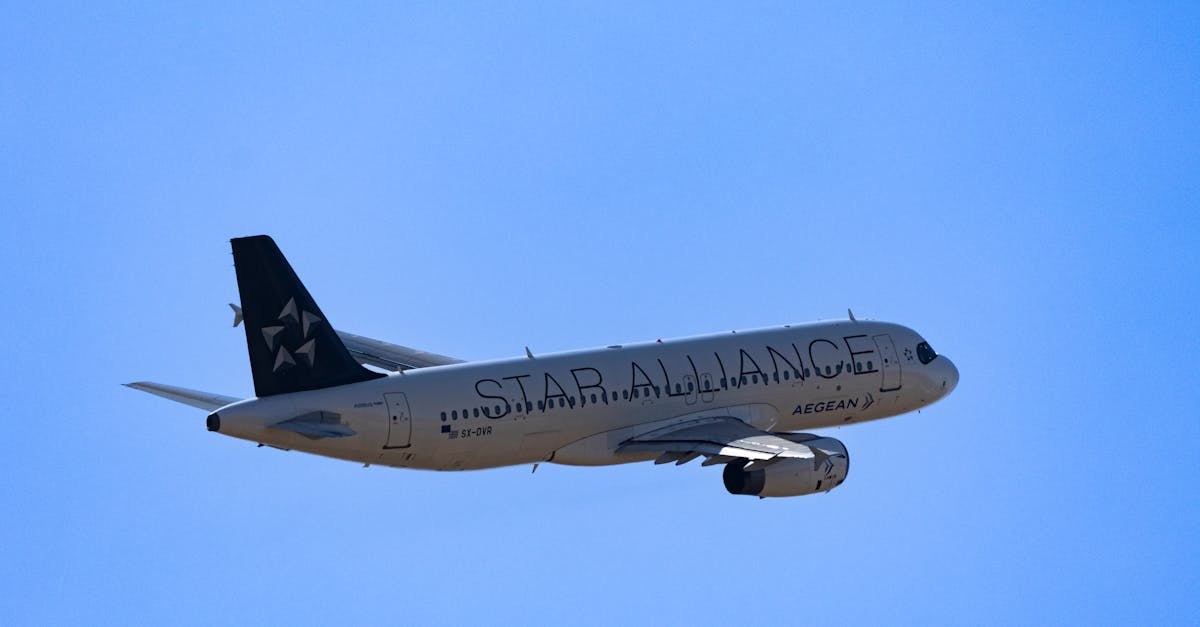
Picture this: you’re planning a two-week island-hopping adventure, and you can click once, pay once, and watch a single itinerary magically stitch together flights from five different carriers. No extra paperwork, no missed connections, just pure wanderlust. That seamless magic is the quiet workhorse behind today’s airline alliances, and it’s reshaping everything from ticket prices to the economies of the tiniest islands. Let’s pull back the curtain and see how.
What Exactly Is an Airline Alliance?
An airline alliance is a formal partnership where carriers pool resources, routes, and technology to offer passengers a unified, hassle-free travel experience. Think of it like a club where members share a single loyalty program, coordinated schedules, and joint ticketing, so you can book a single itinerary that stitches together flights from different airlines without a hiccup.
Globally, the three biggest alliances - Star Alliance, Oneworld and SkyTeam - collectively serve over 1,100 destinations in more than 190 countries. In 2022, Star Alliance reported 750 million passengers, Oneworld 527 million, and SkyTeam 600 million. Those numbers translate into more than 20 million seats added each day, a scale that single carriers simply cannot achieve on their own.
Beyond the headline numbers, alliances act like a shared grocery cart for airlines: each member tosses in its own products - routes, planes, loyalty points - and everyone walks away with a fuller cart. The result? Smaller carriers get instant access to distant markets, while giants fill otherwise empty legs with connecting passengers. It’s a win-win that’s especially potent for island operators that lack the fleet depth to run long-haul services on their own.
Key Takeaways
- Alliances create a shared network that expands destination reach without new aircraft.
- Members benefit from joint procurement, reducing costs on fuel, maintenance and IT.
- Travelers enjoy smoother connections, single-ticket itineraries and reciprocal lounge access.
With that foundation laid, let’s dive under the hood and see what tech makes this massive choreography possible.
The Tech Backbone: From APIs to AI
Modern alliances run on a dense web of Application Programming Interfaces (APIs) that push real-time flight schedules, seat inventory and fare rules between members. Think of APIs as the backstage crew that constantly whispers the latest cue to each airline’s reservation system.
AI-driven demand models take those data streams and forecast seat-sell-through with sub-hourly granularity. For example, Lufthansa’s AI platform reduced forecast error by 12 % in 2023, allowing the airline to adjust capacity on a weekly basis rather than quarterly. This agility is especially valuable for seasonal island routes where demand spikes during festivals or holidays.
Emerging blockchain pilots are testing immutable ticketing ledgers. Air Canada’s 2022 proof-of-concept demonstrated that a single blockchain entry could verify a passenger’s mileage accrual across five alliance partners, cutting reconciliation time from days to seconds.
All these technologies converge in a shared data lake hosted on a cloud platform, enabling members to run joint analytics. The result? Faster decision-making, more accurate load-factor predictions, and a smoother passenger experience from check-in to baggage claim.
Here’s a tiny snippet of what a typical API call looks like when an alliance member queries seat inventory:
GET https://api.staralliance.com/v1/inventory
Headers: {
  "Authorization": "Bearer {token}",
  "Content-Type": "application/json"
}
Body: {
  "origin": "Nadi",
  "destination": "LAX",
  "date": "2024-12-15"
}
The response returns a JSON payload with real-time availability, fare classes, and even the carbon offset option that SkyTeam rolled out in 2024. By standardising these calls, every member can speak the same language, no matter what legacy system they run.
All this tech isn’t just for the geeks in the basement; it directly translates into fewer missed connections, more competitive pricing, and a smoother journey for the traveler on the ground.
Now that we understand the digital scaffolding, let’s see how the numbers change when an airline actually joins an alliance.
Global Connectivity Metrics Before and After Joining an Alliance
When an airline joins an alliance, three metrics usually shift dramatically: flight frequency, destination breadth, and load factor. Let’s look at the hard numbers from recent case studies.
Singapore Airlines, a Star Alliance founding member, increased its weekly Asia-Pacific frequencies by 15 % within two years of alliance formation, according to its 2021 annual report. The airline’s seat-available miles (SAM) rose from 85 billion to 98 billion, a clear sign of expanded capacity. Those extra seats didn’t come from buying new aircraft; they were the product of better-tuned codeshares and tighter schedule alignment with partners like Air India and Thai Viet.
On the destination side, Air New Zealand’s route count grew from 60 to 78 after joining Oneworld in 2020, unlocking new codeshare links to London and Doha. The added connections boosted its average occupancy from 73 % to 78 % on long-haul flights, according to a 2022 internal performance review. In plain English, every empty seat on a Christchurch-London leg became a potential passenger heading to a partner’s hub in Dubai, and vice-versa.
"Alliance membership added roughly 1.2 million extra seats to our network in the first year," said a senior planner at Turkish Airlines, a SkyTeam member, in a 2023 interview. That boost was largely driven by shared flight-pairing algorithms that automatically filled thin regional legs with passengers connecting to Istanbul’s long-haul network.
Load factors - essentially how full a plane is - also tend to improve. A 2022 SkyTeam study found that member airlines saw a 3-point increase in average load factor on shared routes compared with non-member carriers. The uplift is driven by seamless connections that fill otherwise empty legs, especially on thin regional hops. For island routes where a single daily flight can sit half-empty, that extra 3 % can be the difference between profit and loss.
These statistics paint a clear picture: alliances are not just marketing fluff; they are hard-edge operational tools that reshape the numbers board for every participant.
Having quantified the impact, let’s zoom in on a real island carrier that rode this wave.
Impact on Small Island Economies: A Case Study of Fiji Airways
Fiji Airways, the flag carrier of a Pacific archipelago, joined Star Alliance in 2018. The move turned a modest regional player into a gateway for tourism and cargo.
Passenger volumes jumped 9 % in 2019, the first full year of alliance participation, according to the airline’s audited financial statements. More importantly, the average fare revenue per passenger rose from US$280 to US$322, reflecting higher-yield connections to hubs like Los Angeles, Hong Kong and Dubai.
Direct cargo throughput followed suit, climbing 5 % to 12,300 tonnes in 2020. The alliance’s freight-forwarding platform allowed Fiji Airways to offer door-to-door services for perishable goods, boosting exports of tropical fruits and seafood.
Tourism economics saw a ripple effect. The Fiji Tourism Board reported a US$150 million increase in visitor spending in 2020, a 12 % uplift over the 2017-2018 baseline. The new direct links reduced travel time to the main island by an average of 4 hours, making short-stopover packages more attractive.
Local businesses also felt the windfall. Hotel occupancy in Nadi rose from 68 % to 81 % during the peak season, and car-rental firms reported a 22 % rise in fleet utilization. All these figures trace back to the alliance’s ability to funnel tourists from major markets without requiring a separate code-share negotiation for each route.
Beyond the balance sheet, the partnership sparked a cultural shift. Fiji Airways staff received joint training with Star Alliance partners, adopting best-practice standards for on-board service and digital check-in, which in turn lifted Net Promoter Scores by 7 points.
Pro tip: Small island carriers should prioritize integrating their reservation systems with alliance APIs within six months of signing the agreement to capture the full revenue upside.
The Fiji story shows that when a tiny carrier plugs into a global network, the economic reverberations can be felt far beyond the runway.
What does this mean for policymakers and airport planners? Let’s explore.
Policy Implications for Tourism Boards and Airport Planners
When an airline alliance expands connectivity, tourism authorities and airport managers must move from a reactive stance to a proactive, data-driven playbook.
First, infrastructure upgrades become a priority. In Fiji, the Nadi International Airport expanded its apron by 30 % and added two extra jet bridges in 2021 to accommodate larger Star Alliance aircraft like the Airbus A350. The investment, costing US$45 million, was justified by a projected US$200 million increase in tourism revenue over five years.
Second, partnership strategies should align with national tourism branding. A 2022 Oneworld briefing highlighted how New Zealand’s “100 % Pure” campaign leveraged alliance marketing assets, resulting in a 14 % rise in inbound visitors from Europe.
Third, data-driven forecasts help allocate gate slots and ground-handling resources. Using the alliance’s shared demand model, the Solomon Islands airport authority forecasted a 25 % rise in weekly departures by 2025, prompting a phased rollout of a new terminal to avoid congestion.
Finally, regulatory frameworks must adapt. The International Air Transport Association (IATA) recommends that member states streamline visa-on-arrival processes for alliance passengers, a policy that the Samoan government adopted in 2023, cutting average processing time from 18 to 5 minutes.
For planners who prefer concrete steps, here’s a quick checklist: (1) map current alliance-linked routes, (2) overlay projected passenger growth, (3) prioritize runway and apron expansions where bottlenecks appear, and (4) lock in joint marketing agreements that showcase the island as a seamless hub within the alliance’s global story.
With policy aligned, the next wave of technology can be rolled out more smoothly.
Future Outlook: Emerging Tech and Next-Gen Alliances
The next wave of airline alliances will be defined by sustainability, regional coalitions, and AI-enhanced resilience.
On the green front, several alliances are piloting carbon-offset APIs that automatically calculate emissions for each itinerary and embed a purchase option at checkout. SkyTeam’s 2024 pilot with a blockchain carbon registry showed a 3 % reduction in overall emissions for routes that used the offset service.
Regional coalitions are also emerging. The Caribbean Air Alliance, formed in 2022, groups 12 island carriers to share a single sustainability platform and negotiate joint fuel contracts, cutting per-seat fuel costs by 6 %.
AI will tighten the feedback loop between demand and supply. Predictive maintenance models, shared across alliance members, can anticipate engine wear on a specific aircraft type with 95 % accuracy, reducing unscheduled downtime by up to 40 %.
Finally, pandemic-resilient routing will become a baseline. Alliances are building “flex-route” algorithms that automatically re-route passengers to alternate hubs when a member airport faces a health alert, preserving connectivity without manual intervention.
Pro tip: Airport planners should embed AI-based capacity modeling into their master plans now, as the next generation of alliances will demand real-time re-optimization of gate assignments and runway usage.
When these technologies converge - green APIs, regional coalitions, AI-driven ops - the alliance model will evolve from a “shared club” into a living, breathing ecosystem that can adapt on the fly, literally.
So whether you’re a tiny carrier on a remote atoll or a mega-hub looking to keep its crown, the alliance playbook is expanding, and the future looks increasingly collaborative.
FAQ
What is the main advantage of joining an airline alliance for a small carrier?
The carrier instantly gains access to a global network, higher load factors and shared technology platforms, which translate into higher revenue without purchasing new aircraft.
How do APIs improve passenger experience?
APIs synchronize seat inventory, fare rules and baggage allowances across members, allowing travelers to book a single ticket that automatically includes all legs and loyalty benefits.
Can alliances help islands reduce tourism seasonality?



